
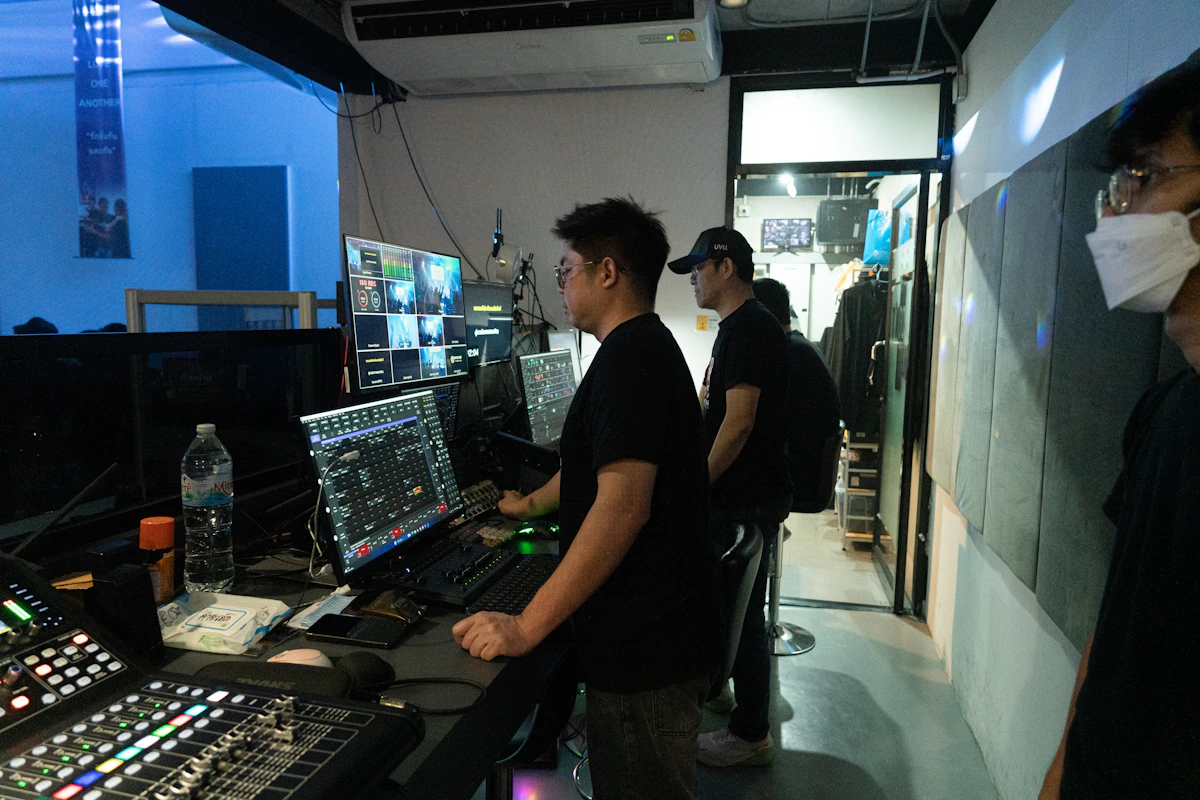
Start with some simple arithmetic. A week has 168 hours. At 40 hours per person, keeping one analyst's chair occupied day and night takes 4.2 full-time staff. Add annual leave, sickness, training and the people who inevitably move on, and it's closer to five or six. And that's one chair, with no senior analyst to escalate to and no tools yet.
For a 300-person company, that sum usually ends the discussion about building a security operations centre. It's also a large part of why managed SOC services have become the default for mid-size firms in the UAE.
The 2am problem
Picture a mid-size Abu Dhabi contractor. It has good firewalls, endpoint protection and a logging tool, and two capable people in IT who work 8 to 5. At 2am on a Saturday, a service account signs in from an unusual location and starts touching file servers. The tool raises an alert, and that alert joins several hundred others in a queue nobody will open until Monday.
By Monday, the attacker has had more than two days. The alert was there all along. What was missing was someone awake to read it and authorised to act.
That's a scenario, but it's why having security tools and having security monitoring are different things. The National reported 640,000 attacks on UAE targets in a single day in September 2026, and those don't stop for the weekend.
What you actually get from a managed SOC

People on shift
Analysts watch your alerts, filter out the noise and investigate what's left. You get a phone call about the three events that matter, not a report about the 3,000 that don't.
Speed that fits the threat
With a 29-minute average breakout time, and a fastest recorded case of 27 seconds, response times need to be measured in minutes. A team that's already awake has a far better chance of containing an attack early.
Experience you couldn't hire alone
A SOC sees attacks across many clients, so an attack that's new to you may be familiar to them. A small internal team only learns from its own incidents, and that's an expensive way to learn.
Evidence for audits and clients
Monitoring and log records also support ISO 27001, SOC 2 and regulators' expectations. The same work helps with both security and compliance.
A cost you can plan for
In-house costs include salaries, tools, recruitment and replacing staff who leave. A managed service turns much of that into a monthly fee. It also doesn't fall apart when one person resigns.
In-house, managed or hybrid?
| In-house SOC | Managed SOC | Hybrid | |
|---|---|---|---|
| Best for | Large or highly sensitive organisations | Mid-size firms without shift capacity | Firms with some security staff who need nights and weekends covered |
| Team | You hire and retain | Provider supplies analysts | Shared between both |
| Knowledge of your business | Deep | Grows over time, so onboarding matters | Good |
| Speed to start | Slow | Usually faster | Moderate |
| Main risk | Cost, staff turnover and burnout | Unclear authority to act | Gaps in who does what |
When a managed SOC isn't your next step
Monitoring only helps if the basics are in place. It's probably too early if:
You have no multi-factor authentication or tested backups. Do those first, because they're cheaper and prevent more.
You have very few systems and limited sensitive data. Good endpoint protection with alerts may be enough for now.
Nobody internally can make a decision when the SOC calls. You need that person first, and a virtual CISO can help.
Questions to ask a provider
What exactly happens at 3am when you see something serious? Ask them to walk through it step by step.
Can you act, or only notify? Agree whether they can isolate a machine or disable an account without waking you.
What is your response time for critical alerts, and is it in the contract?
Which of our systems will you monitor? Cloud, email and identity logs matter as much as firewalls.
Where are our logs stored, and for how long? Check this against your regulators and contracts.
What will we see each month? Look for clear reporting on what was found and fixed.
What happens if we leave? You should keep your logs and your detection history.
Also decide what cover you need. Many companies handling payments, client data or virtual assets choose 24x7. A 12x7 model can suit lower-risk environments, provided critical alerts outside those hours are escalated properly. AI is also moving into SOC work, so ask providers how they use it and who checks its decisions.
Intello's managed SOC offers 24x7 or 12x7 monitoring with Tier 1 to 3 analysts and a 15-minute SLA on critical alerts, with services in Dubai, Abu Dhabi and Sharjah.
Comparing providers? See the Top 10 Managed SOC Providers in the UAE.
See our managed SOC services or talk to our team.
Frequently asked questions
Why use a managed SOC?
Round-the-clock monitoring takes more people than most mid-size companies can justify. A managed SOC provides trained analysts, tools and shift cover for a predictable fee, and attackers don't keep office hours.
What are the benefits of SOC as a service?
Faster detection and response, around-the-clock cover, access to experienced analysts, support for audits and compliance, and costs that are easier to plan than building an in-house team.
How many people does an in-house 24x7 SOC need?
One seat covered around the clock is 168 hours a week, or 4.2 full-time staff at 40 hours each. With leave, sickness and escalation, most teams need considerably more.
Is a managed SOC better than an in-house SOC?
It depends on your size and risk. Mid-size companies usually get better cover from a managed SOC. Large or highly sensitive organisations may prefer their own team or a hybrid.
What is the difference between 24x7 and 12x7 monitoring?
With 24x7, analysts watch your environment all the time. With 12x7, monitoring covers 12 hours a day, and critical alerts outside those hours are escalated. It usually suits lower-risk environments.